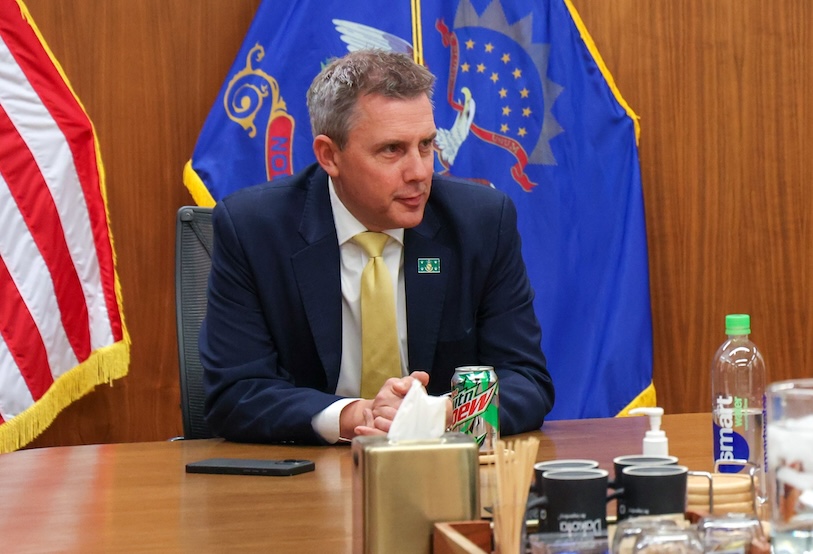
North Dakota – North Dakota Gov. Kelly Armstrong is backing a bipartisan Senate permitting agreement, saying the legislation could make it easier to move major energy and infrastructure projects forward while providing greater certainty in the federal approval process.
“As I often say, you only need to stop linear infrastructure in one place to stop an entire project,” Armstrong said in an Oct. 2 post. “This bipartisan bill is a real opportunity to ensure efficiency, certainty and transparency in the permitting process – keeping energy affordable and our country moving forward.”
Armstrong was responding to a post from Sen. Shelley Moore Capito, R-W.Va., who described the Bipartisan American Affordability and Jobs Act as a major step toward reforming what she called a fractured federal permitting system.
The legislation was introduced by Capito, Sen. Mike Lee, R-Utah, Sen. Sheldon Whitehouse, D-R.I., and Sen. Martin Heinrich, D-N.M., who are leaders of the Senate committees overseeing energy, natural resources and environmental issues. The bipartisan group reached an agreement after months of negotiations over how to reform federal environmental reviews and permitting for energy and infrastructure projects.
The bill is designed to speed up federal reviews and provide more certainty for projects once permits have been issued. Under the proposal, permitted energy and infrastructure projects would generally retain their permits unless extraordinary circumstances occur, laws are violated or a court orders a change.
The legislation also includes provisions targeting the growing demand for electricity from data centers. One provision would require data centers to pay for their associated transmission costs rather than shifting those costs to other electricity customers.
Supporters of the agreement say changes to the permitting process are needed as the United States faces increasing demand for electricity and infrastructure. Reuters reported that the proposal is intended to accelerate construction of transmission lines, energy projects, data centers and mines by setting deadlines for environmental reviews and making other changes to the federal approval process.
For Armstrong, the issue is particularly relevant to large infrastructure projects that can depend on multiple permits and approvals. His warning that stopping linear infrastructure at a single point can halt an entire project reflects his argument that a more predictable permitting system could reduce delays.
The bipartisan nature of the agreement has also drawn attention because the negotiations involved both Republican and Democratic Senate leaders. Capito and Lee represent the Republican side of the negotiations, while Whitehouse and Heinrich are Democrats. The lawmakers have described the proposal as a compromise intended to address lengthy permitting timelines while maintaining environmental protections.
The proposal has received support from energy and industry groups, although some environmental organizations have raised concerns about potential changes to environmental safeguards and the effect the legislation could have on fossil fuel development.
The Senate agreement is not expected to receive a vote before the November midterm elections. Reuters reported that lawmakers planned to continue working on the legislation and consider it after the elections, with additional amendments possible before a final vote.
Armstrong’s support adds another state-level voice behind the bipartisan permitting effort as lawmakers continue negotiations over the legislation.
The governor said the goal should be a permitting process that provides efficiency, certainty and transparency while helping keep energy affordable and allowing infrastructure projects to move forward.
For supporters, the legislation represents an attempt to address long-standing delays in federal permitting at a time when demand for new energy infrastructure continues to grow.
North Dakota Gov. Armstrong responds to bipartisan permitting bill, says ‘you only need to stop linear infrastructure in one place to stop an entire project’ while backing effort to streamline permitting process